

Living with narcolepsy can feel like an uphill battle against your own body. If you or someone close to you has recently been diagnosed, you might be wondering how this complex sleep disorder is viewed under Australian law. Is narcolepsy considered a disability? Can you access government support, or request changes at your workplace?
Navigating daily life when your brain struggles to regulate sleep is exhausting, but you do not have to struggle in silence. Understanding your legal rights and options is the first step toward reclaiming control over your routine.
What Narcolepsy Actually Is (And What It Isn’t)
Narcolepsy is a chronic neurological condition that disrupts the brain’s ability to manage normal sleep-wake cycles. It is not a sign of laziness, lack of motivation, or a poor night’s sleep. Instead, it is a medical condition where the boundaries between wakefulness and sleep become blurred.
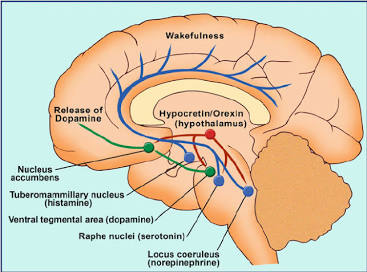
As shown in the neurological pathway diagram, most cases of narcolepsy (specifically Type 1) stem from a severe shortage of hypocretin (also known as orexin). This crucial neurotransmitter is produced in the hypothalamus to keep us awake and alert. When these cells are damaged—often due to an autoimmune response—the brain loses its primary stabilizer for wakefulness.
The Two Main Types of Narcolepsy
-
Type 1 Narcolepsy (With Cataplexy): This form includes sudden, temporary muscle weakness or collapse triggered by strong emotions like laughter, surprise, or anger.
-
Type 2 Narcolepsy (Without Cataplexy): Individuals experience severe daytime sleepiness but do not experience emotional fainting spells or sudden muscle drops.
Is Narcolepsy Recognised as a Disability in Australia?
The short answer is yes. In Australia, whether a condition is viewed as a disability depends entirely on how it impacts your daily functioning, rather than just the medical label itself.
Centrelink and the Disability Support Pension (DSP)
To qualify for financial assistance through the Disability Support Pension (DSP) for narcolepsy, Centrelink requires definitive medical evidence proving that your condition is fully diagnosed, treated, and stabilised. The assessment process is strictly guided by the federal Social Security (Impairment Tables) Determination.
Because narcolepsy is a neurological disorder, your claim must be backed by a comprehensive report from a qualified sleep physician or neurologist. To be granted the DSP, your symptoms must score a minimum of 20 points on the standard Impairment Tables (typically Table 7: Brain Function or Table 1: Functions requiring Physical Exertion). You must demonstrate that your excessive daytime sleepiness or severe cataplexy attacks create a functional impairment that prevents you from working, or being retrained for work, for at least 15 hours per week over the next two years.
Navigating the National Disability Insurance Scheme (NDIS)
While many individuals manage their symptoms successfully through private medical routines, severe or treatment-resistant narcolepsy can qualify for support under the National Disability Insurance Scheme (NDIS).
To gain access to NDIS funding, you must satisfy the ‘disability requirements’ under Section 24 of the National Disability Insurance Scheme Act 2013. This means providing diagnostic evidence (such as your Polysomnography and MSLT results) alongside a functional capacity assessment. You must prove that narcolepsy causes a substantial, permanent reduction in your capacity for everyday tasks.
If your access request is approved, the NDIS does not fund your clinical medical treatments or wakefulness medications. Instead, it provides customized funding for social and economic participation supports. This can include:
-
Funding for assistive technologies or smart alerts to keep you safe during sudden sleep attacks.
-
Funded transport assistance if your condition prevents you from holding an Australian driver’s licence.
-
Personal support care or workplace assistance to help you maintain your career routine safely.
How Narcolepsy Shapes an Ordinary Day
To truly appreciate why narcolepsy is classified as a disability, it helps to see how it disrupts a standard daily routine. For an unmanaged individual, the sleep architecture is completely fractured.
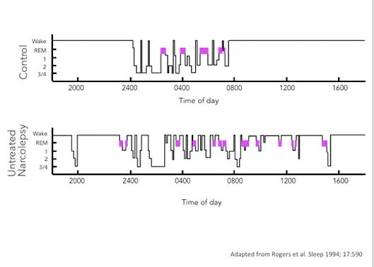
As the sleep architecture graph illustrates, while a typical sleeper experiences structured, predictable phases, an untreated narcoleptic individual experiences highly fragmented nighttime sleep alongside frequent, chaotic dips into REM sleep throughout the day. This creates an exhausting cycle:
-
The Morning Struggle: Waking up feeling profoundly groggy, regardless of how many hours were spent in bed.
-
The Commute: Fighting sudden, intense “sleep attacks” that arrive without warning, making driving or public transport highly stressful.
-
At Work or School: Experiencing micro-sleeps (brief lapses of consciousness lasting seconds), brain fog, memory lapses, and a sharp reduction in reaction speed.
-
Social Hurdles: Avoiding gatherings out of fear that laughter might trigger a cataplexy attack, causing temporary physical helplessness.
Workplace Rights and Reasonable Adjustments
Because you are protected by Australian employment laws, you have the right to request reasonable adjustments from your employer to help you perform your job safely. You do not have to disclose your diagnosis to your work colleagues, but talking to your manager or Human Resources team can open doors to vital support structures.
Effective workplace adjustments for narcolepsy include:
Managing Symptoms: Medical and Lifestyle Support
While lifestyle habits form an excellent foundation for management, medical treatment is usually the cornerstone of regaining control over your day.
Medical Support Options
Many Australians work closely with their sleep specialists to find an effective medication routine. Wakefulness-promoting treatments, including Modafinil-based options like Modalert, Modvigil, and Modasmart, are used across the globe to help keep the brain alert and minimise the frequency of sudden daytime sleep attacks. These options help bridge the gap caused by missing wakefulness chemicals in the brain.
Lifestyle Strategies That Make a Difference
-
Strict Sleep Hygiene: Going to bed and waking up at the exact same time every single day, including weekends.
-
Dietary Adjustments: Eating smaller, more frequent meals that focus on lean proteins and complex carbohydrates, while avoiding heavy, sugar-laden foods that induce drowsiness.
-
Strategic Movement: Incorporating short stretch breaks and light exercise throughout the day to stimulate circulation and stay present.
Essential Narcolepsy FAQs for Australians
What tests are used to confirm a diagnosis in Australia?
An accurate diagnosis requires an overnight sleep study known as a Polysomnography (PSG), followed immediately the next day by a Multiple Sleep Latency Test (MSLT). These tests are conducted in specialist sleep clinics to track your brain waves, breathing, and how quickly you drop into REM sleep during daytime opportunities.
Can people with narcolepsy safely drive in Australia?
Driving with narcolepsy is strictly regulated by state transport authorities (such as Austroads guidelines). You must report your condition to your local licensing authority (e.g., Service NSW, VicRoads). You can generally continue driving if an authorized sleep specialist confirms that your symptoms are well-controlled by medication and that you do not experience unexpected daytime lapses in alertness while behind the wheel.
How does narcolepsy differ from standard chronic fatigue?
Chronic fatigue causes a constant, heavy feeling of exhaustion that is rarely relieved by rest, but it does not typically cause a person to suddenly drop into deep sleep. Narcolepsy is characterized by distinct, uncontrollable sleep attacks where the brain abruptly forces the body into a sleep state, often jumping directly into a vivid dream state within minutes.
Can children and teenagers develop this condition?
Yes. Symptoms frequently first emerge during adolescence. In younger people, narcolepsy is often misidentified as a behavioral issue, mood change, or attention deficit disorder because teenagers may display irritability, emotional outbursts, or declining school marks as they struggle to stay awake in class.
Reliable Access to Your Medication
Managing a lifelong neurological disorder requires a dependable routine and steady access to your healthcare supplies. At 24 Hour Meds, we ensure that your orders are packed with complete discretion, processed efficiently, and handled with genuine care.
Whether you are based in Sydney, Melbourne, Brisbane, Adelaide, Perth, or any regional community across Australia, our team focuses on providing professional support, secure ordering systems, and complete peace of mind. Speak with your healthcare professional today to explore your management options, and reach out to us whenever you are ready to secure your treatments.